SKYLT tips van Han
Meester parketteur Han van RIGO Verffabriek laat zien hoe je SKYLT lakt. Tips van de meester!
Bel rigo verffabriek
0255 54 84 48 OF Mail
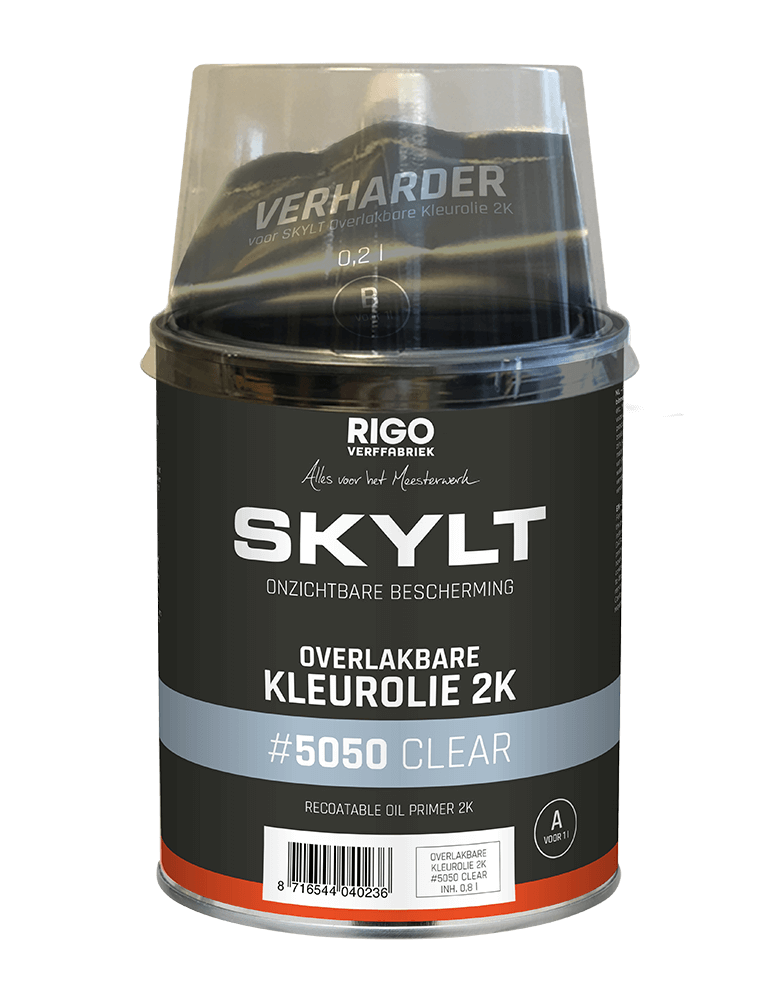
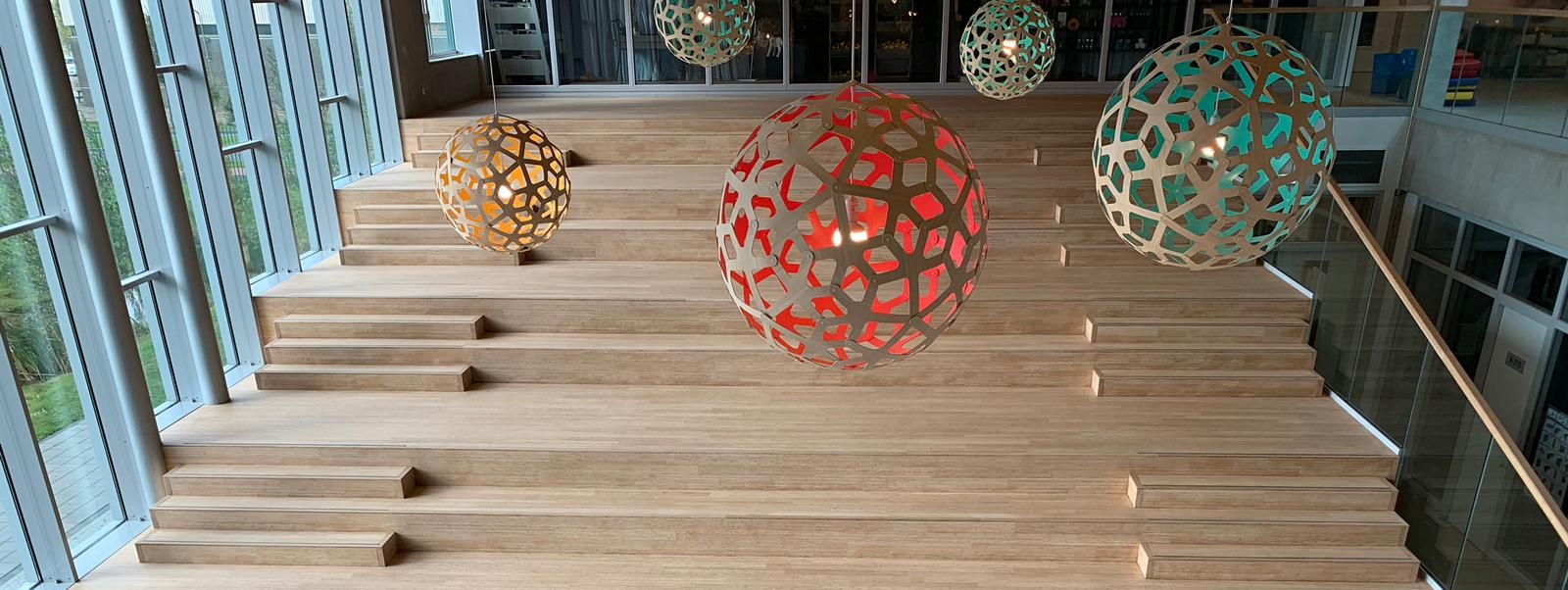
Wanneer je voor het uiterlijk van een olievloer kiest, maar voor het gemak van een parketlak, kies je voor SKYLT Overlakbare Kleurolie 2K. De olie is aankleurbaar met losse kleurpigmenten en kan na droogwrijven direct worden gelakt met SKYLT.



Bel 0255 54 84 48
of stuur een mail of download onze brochures
| Artikel nr. | Product | Inhoud | EAN | Verpakt in |
|---|---|---|---|---|
| 5530223 | SKYLT Overlakbare Kleurolie 2K Black #5052 | 1,00 lt | 8716544040250 | Blik |
| 5530203 | SKYLT Overlakbare Kleurolie 2K Clear #5050 | 1,00 lt | 8716544040236 | Blik |
| 5530213 | SKYLT Overlakbare Kleurolie 2K White #5051 | 1,00 lt | 8716544040243 | Blik |
| Artikel nr. | Product | Inhoud | EAN | Verpakt in |
|---|---|---|---|---|
| 5529471 | SKYLT Original | 0,50 lt | 8716544038097 | Blik |
| 5529473 | SKYLT Original | 1,00 lt | 8716544018730 | Fles |
| 5529474 | SKYLT Original | 4,00 lt | 8716544018747 | Can |
| Artikel nr. | Product | Inhoud | EAN | Verpakt in |
|---|---|---|---|---|
| 5529463 | SKYLT Titanium | 1,00 lt | 8716544040281 | Fles |
| 5529479 | SKYLT Titanium | 4,00 lt | 8716544040298 | Can |
Ja, dat is zo. Wij kunnen op aanvraag kleurpigment maken van nagenoeg alle kleuren die in een Kleuren Meng Systeem (KMS) gemaakt kunnen worden, inclusief alle RAL en NCS kleuren. Hiermee kan een semi-transparante kleur worden gemaakt, naar keuze in basis Clear of basis White. Dat is een mooi stukje maatwerk. Neem voor meer informatie of een bestelling contact met ons op. Daarnaast zijn de losse KLEURPIGMENTEN ook onderling mengbaar.
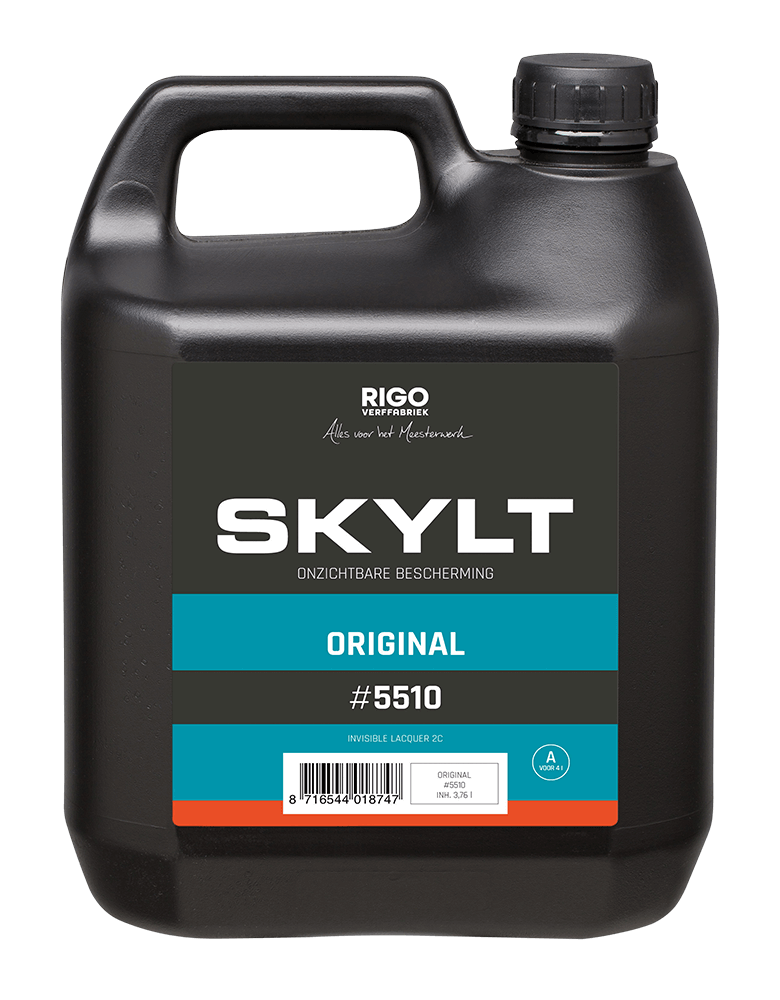
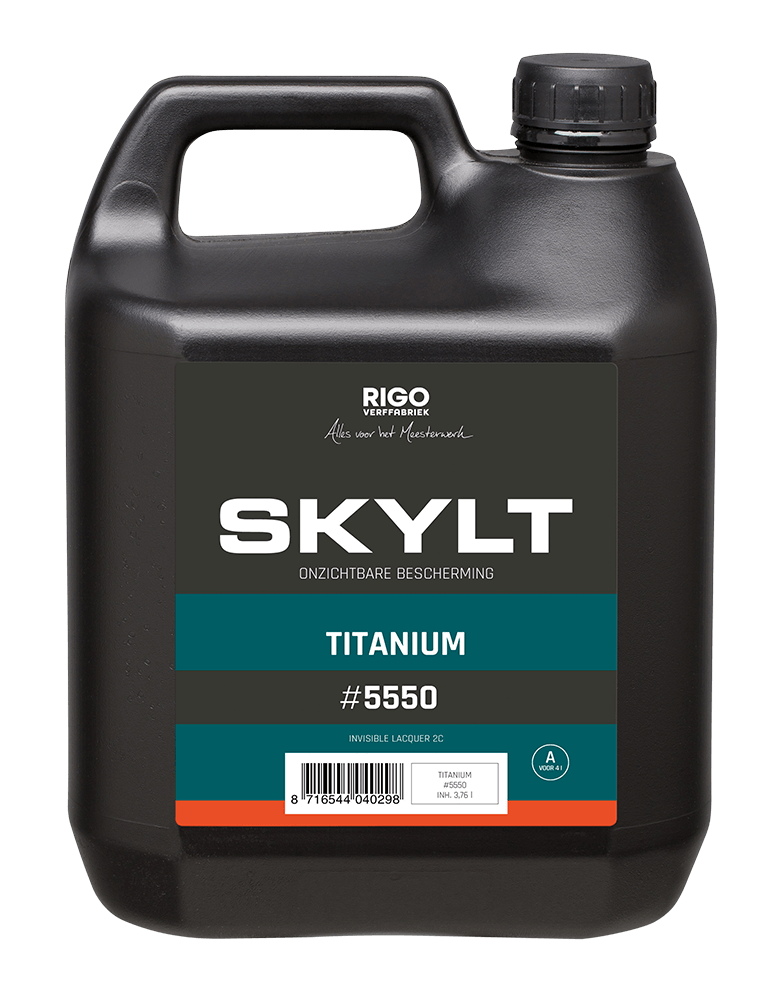
Dit kan alleen met SKYLT Original #5510 of SKYLT Titanium# 5550. Alle andere lakken hebben onvoldoende hechting op de olie. Gebruik dus geen SKYLT Grondlak #5020, geen SKYLT Extra #5300 Topcoat 2K en geen STEP-lak direct over de olie. Wil je een andere glansgraad dan ultramat? Dat is geen enkel probleem. Na de eerste laag SKYLT Original #5510 of SKYLT Titanium #5550 kun je tussenschuren en een ander laktype gebruiken.
Wil je als laatste laag STEP Parketlak 2K #6540 Glans gebruiken, dan is een extra tussenlaag van STEP Parketlak 2K #6550 Mat of #6560 Satijn vereist.
De volgende werkmethode gaat lekker snel en scheelt een hoop handwerk: Zet de olie schraal en spaarzaam op met een 10cm lakrollertje. Na een paar panelen heb je al gauw in de gaten wat de juiste hoeveelheid olie is. Begin liever aan de schrale kant, dan te ruim. Aansluitend inwrijven met een Rotex op rustige stand en lage toeren met een rode of witte pad. Daarna wel volledig handmatig droogwrijven met doeken. Heb je de olie op deze manier van het schrale af opgebracht, dan zul je merken dat het droogwrijven minder kracht kost, je minder doeken nodig hebt en sneller klaar bent.
Na het goed droogwrijven is de SKYLT Overlakbare Kleurolie 2K direct overlakbaar, maar wacht niet langer dan 48 uur met de eerste laklaag.
Daarvoor zijn twee redenen. De eerst is technisch: Langer dan 48 uur wachten vermindert de kans op hechting van de lak. De tweede is pragmatisch: Hoe langer de wachttijd tussen het aanbrengen van de olie en de lak, des te groter is de kans dat het oppervlak beschadigt en vervuild raakt, of de vloer al wordt belopen voordat het systeem is afgemaakt. Dat wil je liever voorkomen omdat vlekverwijdering en herstel lastig en bewerkelijk is.
Ja, er zit een klein kleurverschil in het eindresultaat tussen direct overlakken en overlakken na een droogtijd. Zou je dit in hetzelfde zichtvlak naast elkaar doen, dan is dat zichtbaar in het eindresultaat. Zorg er dus voor om het hele werk op dezelfde manier te doen. Hou hier ook rekening mee met het maken van een representatieve kleurstaal.
Ja, dat kan heel goed. Het is natuurlijk zonde om een heel blik aan te maken als er minder materiaal nodig is.
Wij hebben een tabel met de afvulgewichten van de olie, het kleurpigment en de verharder beschikbaar. Op verzoek kunnen wij deze delen. Neem daarvoor contact op. Met behulp van een kleine keukenweegschaal met TARA-functie kun je daarmee heel nauwkeurig een klein beetje olie in de juiste mengverhouding aanmaken. Hou er wel rekening mee dat een variatie in het aandeel kleurpigment ook een variatie in de eindkleur oplevert.
Is er geen weegschaal voorhanden, dan kun je ook het hele blik olie alvast op kleurmengen, dan een deel uitnemen en daar in een geschatte volume-verhouding van 4:1 de verharder bijmengen.
Het aanbreken van een verpakking olie of lak geeft de inhoud altijd een beperktere houdbaarheid. Zo kan een aangebroken blik olie door droging een vliesje ontstaan. Eerder doorgemengd kleurpigment zakt uit. De verharder reageert op vocht en kan indikken. Wij raden aan de sluiting van de verpakkingen goed schoon te maken en deze zo goed als mogelijk te hersluiten. Bij pouche-verpakking goed de lucht eruit knijpen. Droog en vorstvrij bewaren. Doe bij hergebruik een visuele controle van het materiaal. Wijkt het sterk af van vers materiaal, ruikt het anders of laat het zich niet meer goed oproeren en verwerken, dan raden wij af om het te gebruiken.
Ja! Sterker nog, goed droogwrijven van de olie is essentieel voor de hechting van de lak. Wrijf je niet goed droog, dan heb je een grote kans op onthechting van de lak. Gebruik voor het droogwrijven goed absorberende pluisvrije katoenen doeken. Wissel verzadigde doeken tijdig voor nieuwe. Het oppervlak is voldoende drooggewreven als het met schone, droge schoenen kan worden belopen zonder voetstappen achter te laten of betast kan worden met schone, droge handen zonder vingerafdrukken achter te laten.
Wij raden altijd aan om tussen te schuren. Net als in een drie-laags-laksysteem doe je dat voor de laatste laklaag. Het zorgt voor een gladder eindresultaat en verbetert de hechting. Wordt er van laktype gewisseld (bijvoorbeeld van SKYLT Original naar STEP Parketlak 2K Mat of van SKYLT Original naar SKYLT Extra Topcoat), dan is tussenschuren een must.
Op een normaal vlakgeschuurd oppervlak is het tussenschuren na de eerste laklaag geen enkel probleem. Gebruik bij een 1-schijfboenmachine geen verzwaringsgewicht en gebruik een slijpnetje P120-150 of 180 waar de eerste scherpte van af is. Schuur vlot door en schuur niet zwaarder dan nodig is om de opgekomen vezel te breken. Wil je nog meer controle heben, gebruik dan in plaats van een 1-schijf boenmachine een handschuurmachine op een lager toerental (bijvoorbeeld 3 uit 6) en de rustige stand. Gebruik ook nu schuurpapier waar de eerste scherpte van af is. Zet op buitenhoeken geen kracht.
Als je bij het vlot tussenschuren geen afwijkingen hebt geconstateerd kun je ervan uitgaan dat de hechting goed is. Wil je beter controleren, test dan met een kwalitatief goede gele schilderstape of de lak vast zit. Plak een strook tape op de vloer, druk goed aan en trek de tape dan met een ruk los.
Dat is vervelend. Helaas kan dit niet verholpen worden door er een laklaag over heen te zetten. Het kan zijn dat de hechting verbeterd bij verdere doorharding van de aangebrachte laklagen. Laat de planning dit toe, wacht dan tenminste drie dagen en controleer de hechiting opnieuw. Zit de lak nu wel goed vast, dan kun je doorgaan met het zetten van de laatste laklaag. Is er geen tijd om te wachten, of blijft de hechting onvoldoende, dan zit er niets anders op dan het hout kaal te schuren en het systeem opnieuw af te bouwen.
Terug naar het overzicht
Meester parketteur Han van RIGO Verffabriek laat zien hoe je SKYLT lakt. Tips van de meester!
Liever een vloer met een onbehandelde uitstraling, maar wel beschermd door een lak? Kijk eens naar de SKYLT Original. Voor liefhebbers van puur hout.